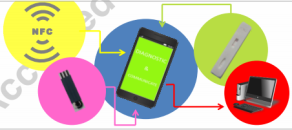
Mobile phone–based biosensing: an emerging “diagnostic and communication” technology

Daniel Quesada-González, Arben Merkoçi. Biosensors and Bioelectronics, 2017, Vol 92, pp 549-562
In this review we discuss recent developments on the use of mobile phones and similar devices for biosensing applications in which diagnostics and communications are coupled. Owing to the capabilities of mobile phones (their cameras, connectivity, portability, etc.) and to advances in biosensing, the coupling of these two technologies...
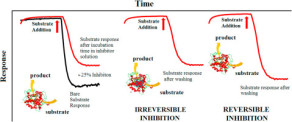

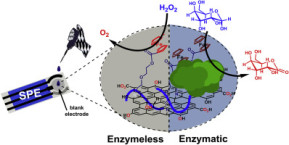
Nanomaterials-based enzyme electrochemical biosensors operating through inhibition for biosensing applications

Sevinc Kurbanoglu, Sibel A. Ozkan, Arben Merkoçi.. Biosensors and Bioelectronics, 2017, Vol 89, Part 2, pp 886-898
In recent years great progress has been made in applying nanomaterials to design novel biosensors. Use of nanomaterials offers to biosensing platforms exceptional optical, electronic and magnetic properties. Nanomaterials can increase the surface of the transducing area of the sensors that in turn bring an increase in catalytic behaviors....

Biosensors for plant pathogen detection

Mohga Khater, Alfredo de la Escosura-Muñiz, Arben Merkoçi.. Biosensors and Bioelectronics, 2017, Vol 93, pp 72-86
Infectious plant diseases are caused by pathogenic microorganisms such as fungi, bacteria, viruses, viroids, phytoplasma and nematodes. Worldwide, plant pathogen infections are among main factors limiting crop productivity and increasing economic losses. Plant pathogen detection is important as first step to manage a plant disease...

High-performance sensor based on copper oxide nanoparticles for dual detection of phenolic compounds and a pesticide

F. Pino, C.C. Mayorga-Martinez, A. Merkoçi. Electrochemistry Communications, Volume 71, October 2016, Pages 33–37
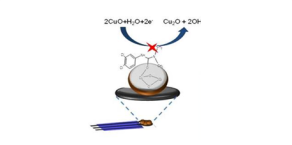
The development of nanomaterials for use as bio-recognition elements is important in the evolution of biosensing systems. In the present article we present a sensing system based on copper oxide nanoparticles (CuO NPs) for the detection of phenolic compounds and pesticides. This sensor takes advantage of the interactions of CuO NPs...

Electrochemically reduced graphene and iridium oxide nanoparticles for inhibition-based angiotensin-converting enzyme inhibitor detection

Sevinc Kurbanoglu, Lourdes Rivas, Sibel A. Ozkan, Arben Merkoçi. Biosensors and Bioelectronics, 2017, Vol 88, pp 122-129
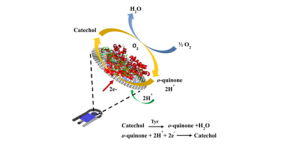
In this work, a novel biosensor based on electrochemically reduced graphene oxide and iridium oxide nanoparticles for the detection of angiotensin-converting enzyme inhibitor drug, captopril, is presented. For the preparation of the biosensor, tyrosinase is immobilized onto screen printed electrode by using 1-Ethyl-3-(3-dimethylaminopropyl)-carbodiimide...

Graphene-based hybrid for enantioselective sensing applications

Erhan Zor, Eden Morales-Narváez, Sabri Alpaydin, Haluk Bingol, Mustafa Ersoz, Arben Merkoçi. Biosensors and Bioelectronics, Volume 87, 15 January 2017, Pages 410–416
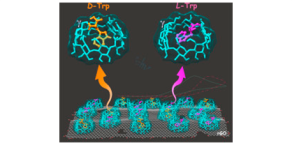
Chirality is a major field of research of chemical biology and is essential in pharmacology. Accordingly, approaches for distinguishing between different chiral forms of a compound are of great interest. We report on an efficient and generic enantioselective sensor that is achieved by coupling reduced graphene oxide with γ-cyclodextrin...

Bio(Sensing) devices based on ferrocene–functionalized graphene and carbon nanotubes

Amal Rabti, Noureddine Raouafi, Arben Merkoçi. Carbon, Volume 108, November 2016, Pages 481–514
Both carbon nanotubes (CNTs) and graphene are important pillars in the ongoing efforts to devise new applications in nanotechnology. One of their most promising applications is building devices such as sensors and biosensors, which is important step for the development of personalized medical healthcare devices. Mediators are usually...

Ferrocene–functionalized graphene electrode for biosensing applications

Amal Rabti, Carmen C. Mayorga–Martinez, Luis Baptista–Pires, Noureddine Raouafi, Arben Merkoçi. Analytica Chimica Acta, 2016, Vol 926, pp 28-35
A novel ferrocene–functionalized reduced graphene oxide (rGO)–based electrode is proposed. It was fabricated by the drop casting of ferrocene–functionalized graphene onto polyester substrate as the working electrode integrated within screen–printed reference and counter electrodes. The ferrocene–functionalized rGO has been...

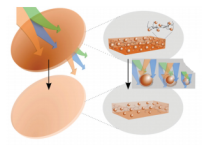
Modulation of population density and size of silver nanoparticles embedded in bacterial cellulose via ammonia exposure: visual detection of volatile compounds in a piece of plasmonic nanopaper

B. Heli,E. Morales-Narváez, H. Golmohammadi, A. Ajji and A. Merkoçi. Nanoscale, 2016, 8, 7984
The localized surface plasmon resonance exhibited by noble metal nanoparticles can be sensitively tuned by varying their size and interparticle distances. We report that corrosive vapour (ammonia) exposure dramatically reduces the population density of silver nanoparticles (AgNPs) embedded within bacterial cellulose, leading to a...

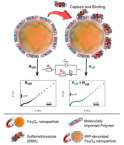
Molecularly Imprinted Polymer–decorated Magnetite Nanoparticles for Selective Sulfonamide Detection

Alejandro Zamora-Gálvez, Abdellatif Ait-Lahcen, Luiza A. Mercante, Eden Morales-Narváez, Aziz Amine, and Arben Merkoçi. Anal. Chem., 2016, 88 (7), pp 3578–3584
Sulfonamides are known not only to be antimicrobial drugs, which lead to antimicrobial resistance, but also to be chemotherapeutic agents that may be allergenic and potentially carcinogenic, which represent a potentially hazardous compound once being present in soil or water. Herein, a hybrid material based on molecularly imprinted...