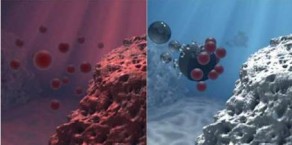
Graphene-based Janus Micromotors for Dynamic Removal of Pollutants

Jahir Orozco, Luiza Mercante, Roberto Pol and Arben Merkoçi . J. Mater. Chem. A, 2016,4, 3371-3378
Persistent organic pollutants (POPs) are ubiquitous in the environment as a result of modern industrial processes. We present an effective POPs decontamination strategy based on its dynamic adsorption at the surface of reduced graphene oxide (rGO)-coated silica (SiO2)-Pt Janus magnetic micromotors for their proper final disposition....
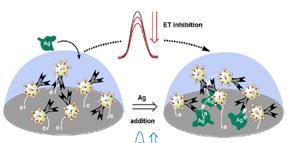
Control of Electron-transfer in Immunonanosensors by Using Polyclonal and Monoclonal Antibodies

Abdelmoneim Mars, Claudio Parolo, Alfredo de la Escosura-Muniz, Noureddine Raouafi and Arben Merkoçi. Electroanalysis Early View, Article first published online: 14 JAN 2016
The design and operation of biosensors is not trivial. For instance, variation in the output signal during monitoring of analytes can not usually be controlled. Hence, if such control were possible, and could be triggered on demand, it would greatly facilitate system design and operation. Herein, we report the design of two types...

Magnetic Bead/Gold Nanoparticle Double-Labeled Primers for Electrochemical Detection of Isothermal Amplified Leishmania DNA

Alfredo de la Escosura-Muñiz, Luis Baptista-Pires, Lorena Serrano, Laura Altet, Olga Francino, Armand Sánchez and Arben Merkoçi. Small, 2016, 12 (2), 205–213
A novel methodology for the isothermal amplification of Leishmania DNA using labeled primers combined with the advantages of magnetic purification/preconcentration and the use of gold nanoparticle (AuNP) tags for the sensitive electrochemical detection of such amplified DNA is developed. Primers labeled with AuNPs and magnetic beads...

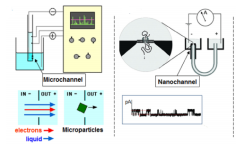
Nanochannels for electrical biosensing

Alfredo de la Escosura-Muñiz and Arben Merkoçi. TrAC Trends in Analytical Chemistry, 2016, 79, 134-150
This review shows the recent trends on the use of both single and array nanochannels for electrical biosensing applications. Some general considerations on the principles of the stochastic sensing, together with an overview about the common routes for nanochannels preparation before focusing on the applications for DNA, protein,...

Water Activated Graphene Oxide Transfer Using Wax Printed Membranes for Fast Patterning of a Touch Sensitive Device

Luis Baptista-Pires, Carmen C. Mayorga-Martínez, Mariana Medina-Sánchez Helena Montón and Arben Merkoçi. ACS Nano, 2016, 10 (1), pp 853–860
We demonstrate a graphene oxide printing technology using wax printed membranes for the fast patterning and water activation transfer using pressure based mechanisms. The wax printed membranes have 50 μm resolution, longtime stability and infinite shaping capability. The use of these membranes complemented with the vacuum filtration...

Detection of parathyroid hormone-like hormone in cancer cell cultures by gold nanoparticles-based lateral flow immunoassays

Alejandro Chamorro-Garcia , Alfredo de la Escosura-Muñiz ,Marisol Espinosa-Castañeda , Carlos J Rodriguez-Hernandez, Carmen de Torres and Arben Merkoçi . Nanomedicine: Nanotechnology, Biology, and Medicine, 2016, 12 (1), 53–61
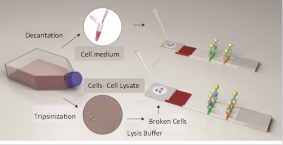
Parathyroid Hormone-like Hormone (PTHLH) exerts relevant roles in the progression and dissemination of several tumours. However, factors influencing its production and secretion have not been fully characterized. The main limitation is the lack of specific, sensitive and widely available techniques to detect and quantify PTHLH. We...

Enhanced detection of quantum dots labelled protein by simultaneous bismuth electrodeposition into microfluidic channel

Mariana Medina-Sánchez, Sandrine Miserere, Miquell Cadevall and Arben Merkoçi. Volume 37, Issue 3 February 2016 Pages 432–437
In this study, we propose an electrochemical immunoassay into a disposable microfluidic platform, using quantum dots (QDs) as labels and their enhanced detection using bismuth as an alternative to mercury electrodes. CdSe@ZnS QDs were used as label to detect human IgG as a model protein and detected through highly sensitive stripping...

Micro and nanomotors in diagnostics

Andrzej Chałupniak, Eden Morales-Narváez, Arben Merkoçi. Volume 95, 1 December 2015, Pages 104–116
Synthetic micro/nanomotors are tiny devices than can be self-propelled or externally powered in the liquid phase by different types of energy source including but not limited to: catalytic, magnetic or acoustic. Showing a myriad of mechanical movements, building block materials, sizes, shapes and propulsion mechanisms micro/nanomotors...

Eco-friendly electrochemical lab-on-paper for heavy metal detection

Mariana Medina-Sánchez, Miquel Cadevall, Josep Ros, Arben Merkoçi. Analytical and Bioanalytical Chemistry November 2015, Volume 407, Issue 28, pp 8445-8449
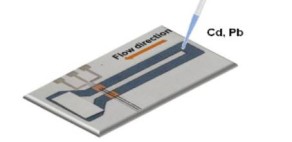
A disposable electrochemical lateral flow paper-based sensing device for heavy metal detection is proposed. The quantification of lead and cadmium in aqueous samples is demonstrated in a range from 10 to 100 ppb with a limit of detection of 7 and 11 ppb respectively. Moreover, the platform itself, which is made of paper, served...

On‐the‐Spot Immobilization of Quantum Dots, Graphene Oxide, and Proteins via Hydrophobins

Alfredo M. Gravagnuolo, Eden Morales-Narváez, Charlene Regina Santos Matos, Sara Longobardi , Paola Giardina and Arben Merkoçi. Advanced Functional Materials,Volume 25, Issue 38 October 14, 2015 Pages 6084–6092
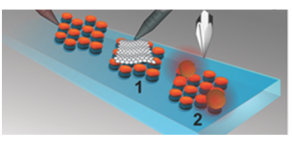
Class I hydrophobin Vmh2, a peculiar surface active and versatile fungal protein, is known to self-assemble into chemically stable amphiphilic films, to be able to change wettability of surfaces, and to strongly adsorb other proteins. Herein, a fast, highly homogeneous and efficient glass functionalization by spontaneous self-assembling...