Towards the next generation of nanobiosensors

Arben Merkoçi. Nature Nanotechnology
Since the term nanobiosensor first emerged over three decades ago, the field has witnessed an explosion of groundbreaking research. Thanks to the development of advanced nanomaterials and nanotechnologies, combined with decades of expertise in biosensing, a wide range of innovative and improved nanobiosensors have been reported,...

Electrochemical lateral flow assays: A new frontier for rapid and quantitative biosensing

Vernalyn Abarintos, Andrew Piper, Arben Merkoci. Current Opinion in Electrochemistry
Electrochemical lateral flow assays (eLFAs) have emerged as a promising alternative to traditional colorimetric LFAs, particularly for applications requiring quantitative readouts and improved sensitivity. Over the past two years, significant advancements have been made in eLFA design, fabrication, and analytical performance, positioning...

Flexible low-resistance laser-reduced graphene oxide for NFC electromyography application

Matheus Guitti Bonando, Nathalia Maria Moraes Fernandes, Gabriel Maroli, David Steinberg, Suelene Silva Piva, Ricardo Jorge Espanhol Andrade, Arben Merkoçi, Cecília de Carvalho Castro e Silva, Lúcia Akemi Miyazato Saito. Emergent Materials
This study focuses on developing and characterizing flexible, low-resistance, laser-reduced graphene oxide (rGO) films, demonstrating a near-field communication (NFC) based electromyography (EMG) application. Graphene oxide (GO) was photothermally reduced on a nylon membrane using a 450 nm pulsed laser, resulting in a sheet resistance...

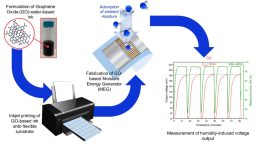
Water-based graphene oxide inks for inkjet-printed flexible moisture energy generators

Katerina Anagnostou, Massimo Urban, Evangelos Sotiropoulos, Christos Polyzoidis, Katerina Kavalieraki, Kyriakos Mouratis, Giulio Rosati, Arben Merkoçi, Konstantinos Rogdakis, Emmanuel Kymakis. Scientific Reports
With the need for clean sustainable energy and low-waste practices rising, battery-free technologies that run on renewable ambient energy sources are an attractive solution to these environmental concerns. Herein, Graphene oxide (GO) and GO-PEDOT: PSS water-based inks were formulated from inexpensive precursor materials following...

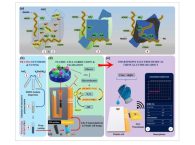
Prussian-Blue Catalysis and NFC Synergy: a Battery-Free Laser-Induced Graphene-Based Platform for Urine Glucose Monitoring at Point-of-Care

Sinan Uzunçar, Gabriel Maroli, Massimo Urban, Arben Merkoçi. Advanced Science
Prussian-blue nanoparticles (PBNPs) show promise in electrochemical hydrogen peroxide (H2O2) sensing but face operational stability challenges without complex strategies. This study introduces a simplified, polymer-based synthesis method, enhancing their stability in a single step. Chemical polymerization of Prussian-blue (PB) and...

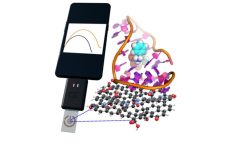
Graphene Derivatives as Efficient Transducing Materials for Covalent Immobilization of Biocomponents in Electrochemical Biosensors

Petr Jakubec, David Panáček, Martin‐Alex Nalepa, Marianna Rossetti, Ruslan Álvarez‐Diduk, Arben Merkoçi, Majlinda Vasjari, Lueda Kulla, Michal Otyepka. ChemElectroChem
This review highlights the role of graphene derivatives in advancing electrochemical biosensors for applications in diagnostics, environmental monitoring, and industrial sensing. Graphene derivatives, including graphene oxide (GO), reduced GO, and wide range of graphenes prepared via fluorographene chemistry, represent a prominent...

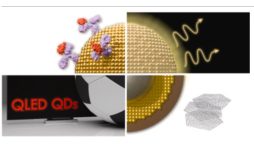
Quantum dots for biosensing: Classification and applications

Daniel Quesada-Gonzalez, Arben Merkoçi, . Biosensors and Bioelectronics
Quantum dots (QDs) are the smallest nanomaterials (2–10 nm), with unique optical and electronic properties. Thanks to these properties, QDs have been standing during the last years as signal tags for different applications, including bioimaging, fluorescent biosensors and electrochemical assays. In this review, we explore...

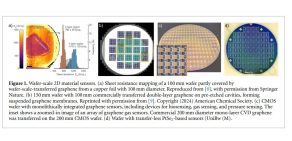
Towards wafer-scale 2D material sensors

Peter G Steeneken, Miika Soikkeli, Sanna Arpiainen, Arto Rantala, Raivo Jaaniso, Roberto Pezone, Sten Vollebregt, Sebastian Lukas, Satender Kataria, Maurits JA Houmes, Ruslan Álvarez-Diduk, Kangho Lee, Hutomo Suryo Wasisto, Sebastian Anzinger, Marc Fueldner, Gerard J Verbiest, Farbod Alijani, Dong Hoon Shin, Ermin Malic, Richard van Rijn, Tarja K Nevanen, Alba Centeno, Amaia Zurutuza, Herre SJ van der Zant, Arben Merkoçi, Georg S Duesberg, Max C Lemme. 2D Materials
The unique properties of two-dimensional (2D) materials bring great promise to improve sensor performance and realise novel sensing principles. However, to enable their high-volume production, wafer-scale processes that allow integration with electronic readout circuits need to be developed. In this perspective, we review recent...

Stability matters: evaluating the long-term performance of AuNP–DNA conjugates in lateral flow assays through varied conjugation methods and storage buffers

Celia Fuentes-Chust, Claudio Parolo, Andrew Piper, Arben Merkoçi. Nanoscale
This study evaluates five distinct conjugation techniques for attaching DNA to gold nanoparticles (AuNPs), focusing on their applicability in lateral flow assays (LFA). The selected methods include three salt-aging techniques, one polyT-adsorption method, and a rapid butanol dehydration (INDEBT) approach. These methods were chosen...

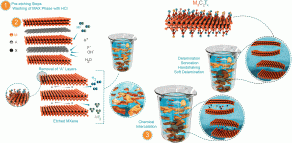
MXenes in healthcare: synthesis, fundamentals and applications

Zaheer Ud Din Babar, Vincenzo Iannotti, Giulio Rosati, Ayesha Zaheer, Raffaele Velotta, Bartolomeo Della Ventura, Ruslan Álvarez-Diduk, Arben Merkoçi. Chemical Society Reviews
Since their discovery over a decade ago, MXenes have transformed the field of “materials for healthcare”, stimulating growing interest in their healthcare-related applications. These developments have also driven significant advancements in MXenes’ synthesis. This review systematically examines the synthesis of MXenes and their...