Nanostructure Tuning of Gold Nanoparticles Films via Click Sintering

Massimo Urban, Giulio Rosati, Gabriel Maroli, Flavio Della Pelle, Andrea Bonini, Laszlo Sajti, Mariangela Fedel, Arben Merkoçi. Small
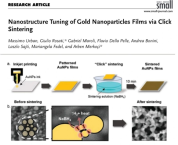
Colloidal metal nanoparticles dispersions are commonly used to create functional printed electronic devices and they typically require time-, energy- and equipment-consuming post-treatments to improve their electrical and mechanical properties. Traditional methods, e.g. thermal, UV/IR, and microwave treatments, limit the substrate...
The Cleanroom-Free, Cheap, and Rapid Fabrication of Nanoelectrodes with Low zM Limits of Detection

Gabriel Maroli, Vernalyn Abarintos, Andrew Piper, Arben Merkoçi. Small
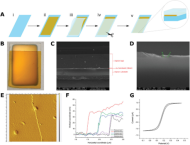
Nanoscale electrodes have been a topic of intense research for many decades. Their enhanced sensitivities, born out of an improved signal-to-noise ratio as electrode dimensions decrease, make them ideal for the development of low-concentration analyte sensors. However, to date, nanoelectrode fabrication has typically required expensive...

An Artificial Miniaturized Peroxidase for Signal Amplification in Lateral Flow Immunoassays

Emilia Renzi, Andrew Piper, Flavia Nastri, Arben Merkoçi, Angela Lombardi. Small
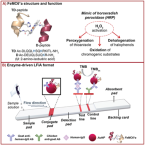
Signal amplification strategies are widely used for improving the sensitivity of lateral flow immunoassays (LFiAs). Herein, the artificial miniaturized peroxidase Fe(III)-MimochromeVI*a (FeMC6*a), immobilized on gold nanoparticles (AuNPs), is used as a strategy to obtain catalytic signal amplification in sandwich immunoassays on...

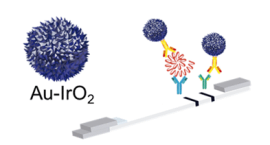
Rational Approach to Tailor Au–IrO2 Nanoflowers as Colorimetric Labels for Lateral Flow Assays

Lourdes Rivas*, Liming Hu, Claudio Parolo, Andrea Idili, and Arben Merkoçi*. ACS Appl. Nano Mater.
As the current pandemic has shown, lateral flow assays (LFAs) are a prime example of point-of-care devices enabling quick testing at an affordable price. However, their ease of use undeniably affects their sensitivity, making them less sensitive than other multi-step and time-consuming diagnostic assays, such as polymerase chain...

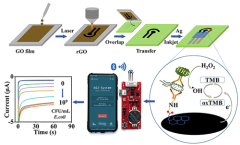
Laser Reduced Graphene Oxide Electrode for Pathogenic Escherichia coli Detection

Lei Zhao, Giulio Rosati*, Andrew Piper*, Cecilia de Carvalho Castro e Silva, Liming Hu, Qiuyue Yang, Flavio Della Pelle, Ruslán Alvarez-Diduk and Arben Merkoçi*. ACS Appl. Mater. Interfaces
Graphene-based materials are of interest in electrochemical biosensing due to their unique properties, such as high surface areas, unique electrochemical properties, and biocompatibility. However, the scalable production of graphene electrodes remains a challenge; it is typically slow, expensive, and inefficient. Herein, we reported...

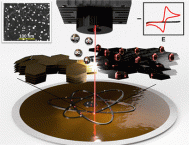
One-Step Laser Nanostructuration of Reduced Graphene Oxide Films Embedding Metal Nanoparticles for Sensing Applications

Annalisa Scroccarello, Ruslan Álvarez-Diduk*, Flavio Della Pelle, Cecilia de Carvalho Castro e Silva, Andrea Idili, Claudio Parolo, Dario Compagnone, and Arben Merkoçi*. ACS Sensors
The combination of two-dimensional materials and metal nanoparticles (MNPs) allows the fabrication of novel nanocomposites with unique physical/chemical properties exploitable in high-performance smart devices and biosensing strategies. Current methods to obtain graphene-based films decorated with noble MNPs are cumbersome, poorly...

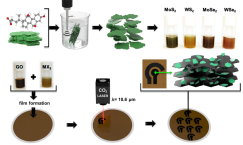
Freestanding laser-induced two dimensional heterostructures for self-contained paper-based sensors

Flavio Della Pelle, Qurat Ul Ain Bukhari, Ruslán Alvarez Diduk, Annalisa Scroccarello, Dario Compagnone, Arben Merkoçi. Nanoscale
The production of 2D/2D heterostructures (HTs) with favorable electrochemical features is challenging, particularly for semiconductor transition metal dichalcogenides (TMDs). In this studies, we introduce a CO2 laser plotter-based technology for the realization of HT films comprising reduced graphene oxide (rGO) and 2D-TMDs (MoS2,...

Metal-free cysteamine-functionalized graphene alleviates mutual interferences in heavy metal electrochemical detection

Qiuyue Yang, Emily P. Nguyen, David Panáček, Veronika Šedajová, Vítězslav Hrubý, Giulio Rosati, Cecilia de Carvalho Castro Silva, Aristides Bakandritsos ORCID, Michal Otyepka, Arben Merkoçi .
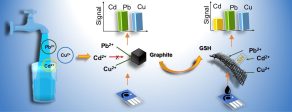
Heavy metal pollutants are of great concern to environmental monitoring due to their potent toxicity. Electrochemical detection, one of the main techniques, is hindered by the mutual interferences of various heavy metal ions in practical use. In particular, the sensitivity of carbon electrodes to Cd2+ ions (one of the most toxic...

Toward Integrated Molecular Lateral Flow Diagnostic Tests Using Advanced Micro- and Nanotechnology

Ana Rubio-Monterde, Daniel Quesada-González, Arben Merkoçi. Analytical Chemistry
Since the COVID-19 pandemic, some of the routine methods for clinical diagnosis of infectious diseases have become closer to the general population and terms like “PCR” (polymerase chain reaction) and “antigen rapid diagnostic test” (RDT) are not restricted only to the scientific community but now also commonly appear in...

Toward Next Generation Lateral Flow Assays: Integration of Nanomaterials

Amadeo Sena-Torralba, Ruslan Álvarez Diduk, Claudio Parolo, Andrew Piper, Arben Merkoçi. Chemical Reviews
Lateral flow assays (LFAs) are currently the most used point-of-care sensors for both diagnostic (e.g., pregnancy test, COVID-19 monitoring) and environmental (e.g., pesticides and bacterial monitoring) applications. Although the core of LFA technology was developed several decades ago, in recent years the integration of novel nanomaterials...