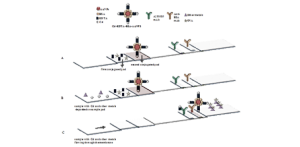
Nowadays the development of systems, devices or methods that integrate several process steps in one multifunctional step for clinic, environmental or industrial proposal constitutes a challenge for many ongoing researches. Here we present a new integrated paper based cadmium (Cd2+) immunosensing system in lateral flow format, which integrates the sample treatment process with the analyte detection process. The principle of Cd2+ detection is based on competitive reaction between the cadmium-ethylenediaminetetraacetic acid-bovine serum albumin-gold nanoparticles (Cd-EDTA-BSA-AuNP) conjugate deposited on the conjugation pad strip and the Cd-EDTA complex formed in the analysis sample for the same binding sites of the 2A81G5 monoclonal antibody (mAb), specific to Cd-EDTA but not Cd2+ free, which is immobilized onto the test line. This platform operates without any sample pretreatment step for Cd2+ detection thanks to an extra conjugation pad that ensures Cd2+ complexation with EDTA and interference masking through Ovalbumin (OVA). The detection and quantification limits found for the device were 0.1 and 0.4 ppb, respectively being these the lowest limits reported up to now for metal sensors based on paper. The accuracy of the device was evaluated by addition of known quantities of Cd2+ to different drinking water samples and its corresponding Cd2+ contents analysis, obtaining recoveries between 95-105% with coefficient of variation of the intermediate precision assay inferior to 10%. In addition, the results obtained here were compared with those obtained with the well-established inductively coupled plasma emission spectroscopy (ICPES) and the analysis of certificate standard samples.